Insights | 2026-11-09
Reducing Warranty Costs for Electronics Manufacturers
Warranty cost is rarely one big number. It is the sum of shipping, replacements sent too early, repairs that could have been avoided and support time spent on questions that a manual would have answered. Looking at each piece separately can show where money is quietly leaking.
Separate the true faults from everything else
Not every warranty contact is a faulty product. Many are set-up problems, compatibility questions, misunderstood features or accessories that need replacing. If every one of these triggers a replacement, costs rise quickly.
First-line triage can sort enquiries before a case is opened. Clear questions, a short troubleshooting script and a knowledge base built around your own products let many customers resolve issues without sending anything back. Where agreed, AI-assisted tools can help with this first line, always backed by human staff and your approved procedures. Our UK customer support page describes the approach.
Diagnose before you replace
Sending a new unit is the fastest way to close a case and often the most expensive. A returned product that is tested properly may turn out to need a firmware recovery, a cable, a power supply or a small part. Repairing at the right level can cost far less than a whole-unit swap.
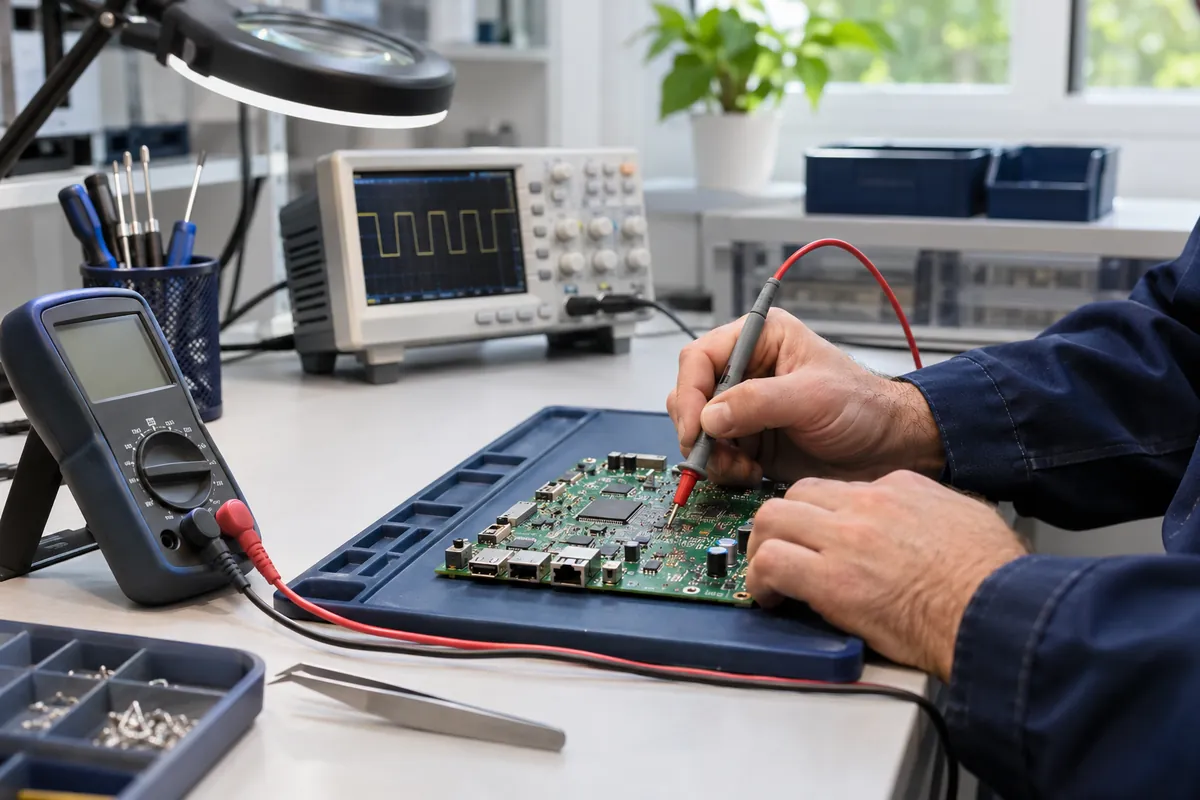
This only works if tests are repeatable. Write a short test checklist for each product family and record results against the serial number. Over time, you will see which faults dominate, and that information can feed back to the factory. See technical support and diagnostics for how testing can be organised.
Keep the right spare parts close to the customer
If a small part is in a factory warehouse thousands of miles away, a cheap fix becomes an expensive replacement. A modest stock of the most commonly failing parts held in the UK can shorten repair times and avoid whole-unit swaps.
Parts stocking needs discipline: a defined range, reorder points and a way to match parts to product revisions. Start with the parts that fail most often rather than holding everything. Our spare parts management page covers this in more detail.
Use refurbishment for what comes back
Returned units are not always faulty. Some are unopened, some are cosmetic returns and some are repairable. Rather than writing them all off, a clear grading process can decide which go back to stock, which are sold as refurbished where you agree to this and which are recycled. Each outcome recovers different value.
Refurbished sales must be described honestly and comply with consumer law, so agree the wording and channels with the manufacturer first. See refurbishment and resale for the options.
Measure, then adjust
Cost reduction comes from knowing your numbers. Useful measures include the share of cases resolved without a return, the share of returns repaired versus replaced, average days to resolution and the most common fault codes by product.
GOV.UK guidance on returns and refunds notes that goods must be repaired or replaced if returned within six months unless the seller can show they were not faulty when sold. That makes early, well-documented diagnosis valuable, because records can show whether a fault was present or caused by misuse. Take legal advice on how this applies to your products.
Watch for hidden costs
Some costs never appear on the warranty line. Support time spent on long email chains, goodwill replacements sent to avoid a bad review, repeated shipping because a unit was returned with the wrong accessories and stock written off because nobody knew what to do with it all count. Tracking these separately for a quarter often shows that handling, not parts, is the biggest cost.
Another is inconsistency. If two agents give two different answers to the same fault, customers notice, and the more generous answer becomes the expectation. A written procedure and a shared knowledge base keep decisions even.
Feed the findings back to the factory
The cheapest warranty claim is the one that never happens. Regular reports showing common faults by batch, firmware version or accessory can lead to packaging changes, clearer manuals, firmware fixes or supplier corrections. Agree with your UK partner how those reports will be shaped and who receives them, so the information reaches the people who can act on it rather than sitting in a spreadsheet.
Next steps
Pull the last three months of UK warranty cases and sort them into set-up issues, genuine faults and damage. Estimate how many could have been fixed with a part or a firmware update. Then look at our warranty management service, or start a conversation through contact us. Savings are possible, but results will depend on your products and volumes.
Give Your Brand a Local UK Presence.
Tell us about your products and where you sell. We will come back with a proposed service scope, subject to agreement.
Prefer to talk it through? Message us on WhatsApp or send an enquiry. A short note about your products is enough, and there is no obligation.